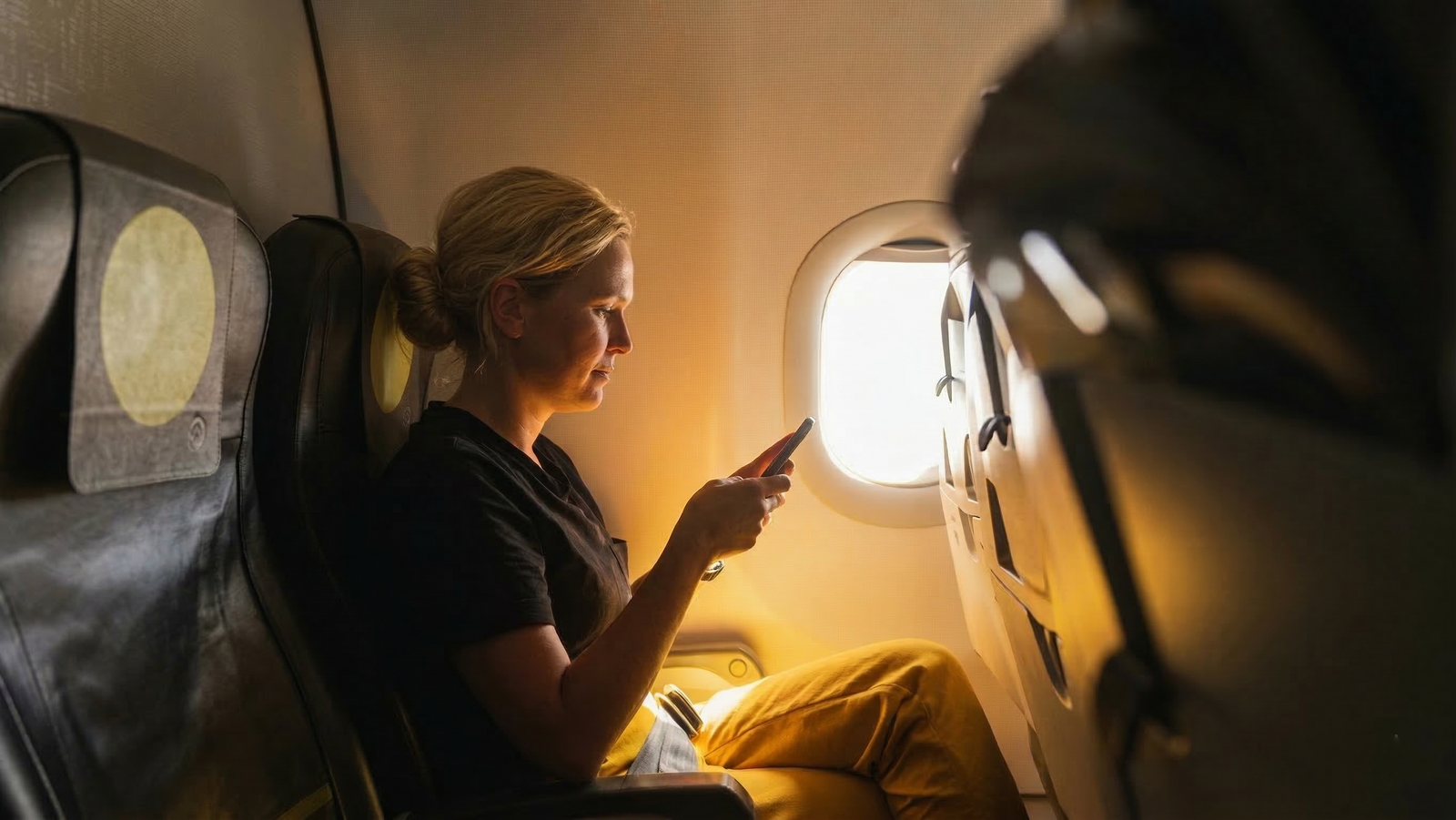
You’re in seat 23A, three hours into a ten-hour flight. The cabin smells like reheated chicken. The person next to you is watching a cooking show. And your stomach is doing the thing it does when altitude, pressurization, dehydration, and whatever else is going on in your body conspire to make a metal tube at 35,000 feet the worst possible place to be nauseous.
Flight nausea affects people across every segment: motion-sensitive travelers, pregnant women in any trimester, GLP-1 medication users whose side effects worsen at altitude, and anyone whose anxiety-nausea pattern activates in confined spaces. This guide covers all of you.
Why Flying Makes Nausea Worse
Three factors converge. First, cabin pressure reduces the oxygen saturation in your blood slightly, which can independently trigger nausea. Second, the pressurized cabin has extremely low humidity (around 10–20%), causing rapid dehydration — and dehydration is one of the most reliable nausea amplifiers regardless of the underlying cause. Third, turbulence creates motion sickness through the classic vestibular-visual conflict: your body feels movement your eyes can’t confirm, especially if you’re reading or looking at a screen.
For GLP-1 users specifically, the combination of altitude, dehydration, and the stress of travel can amplify medication-related nausea significantly. For pregnant travelers, the heightened smell sensitivity and fatigue compound the flight’s physical stressors.
Before the Flight
Hydrate aggressively in the 24 hours before flying. You will lose moisture faster than you can replace it once aboard. Eat a light, bland, protein-forward meal two to three hours before boarding — not immediately before (a full stomach at takeoff is a trigger) and not on an empty stomach (worse).
Begin acupressure before you board. Put your wristband on at the gate. P6 acupressure stimulation is most effective as prevention, not rescue. By the time nausea hits at altitude, the intervention should already be working.
Choose your seat intentionally. Window seats allow you to look at the horizon (helpful for motion nausea). Seats over the wing experience the least turbulence-related movement.
Aisle seats give you easy access to the bathroom and the ability to stand and walk. Prioritize based on which factor matters most for your specific nausea pattern.
During the Flight
Drink water every thirty minutes, whether you feel thirsty or not. Request sparkling water if still water doesn’t appeal. Avoid alcohol (dehydrates), avoid caffeine in large quantities (also dehydrates, though a small coffee is fine), and avoid heavy in-flight meals. If you eat the airline meal, choose the lighter option and eat half.
If nausea hits, direct the overhead air vent toward your face. Cold, moving air reduces nausea through the same mechanism that fresh air helps with car sickness — it provides your body with a sensory input that counters the nausea response. Look out the window at the horizon if you have one. Breathe slowly and deeply.
Maintain P6 acupressure throughout the flight. If you’re pressing manually, sustained pressure for two to three minutes during a nausea wave. If you’re wearing a band, it’s continuous. Ginger chews or peppermint lozenges provide complementary relief during acute episodes. For a full rundown of drug-free options, see our natural nausea remedies guide.
The Long-Haul Specific Challenge
Flights over six hours present a unique problem: fatigue compounds nausea. As your body tires, your tolerance for sensory conflict decreases. If you’re on a ten-hour flight and feeling fine at hour three, don’t assume you’re clear. Prepare for the later hours by staying hydrated, avoiding heavy food, and resting when possible.
For overnight flights, try to sleep during the portion when turbulence is statistically least likely (mid-flight over open ocean, typically). Your vestibular system is less reactive during sleep, which is one reason many people feel worse in the last few hours of a long flight when they’ve been awake for too long.
Your Flight Nausea Kit
Pack in your personal item, not your overhead bag: an acupressure wristband (on your wrist before boarding), ginger chews, peppermint lozenges, a refillable water bottle (empty through security, fill after), bland snacks (crackers, protein bar), a scarf or neck pillow for rest, and a peppermint essential oil on a tissue for smell emergencies.